
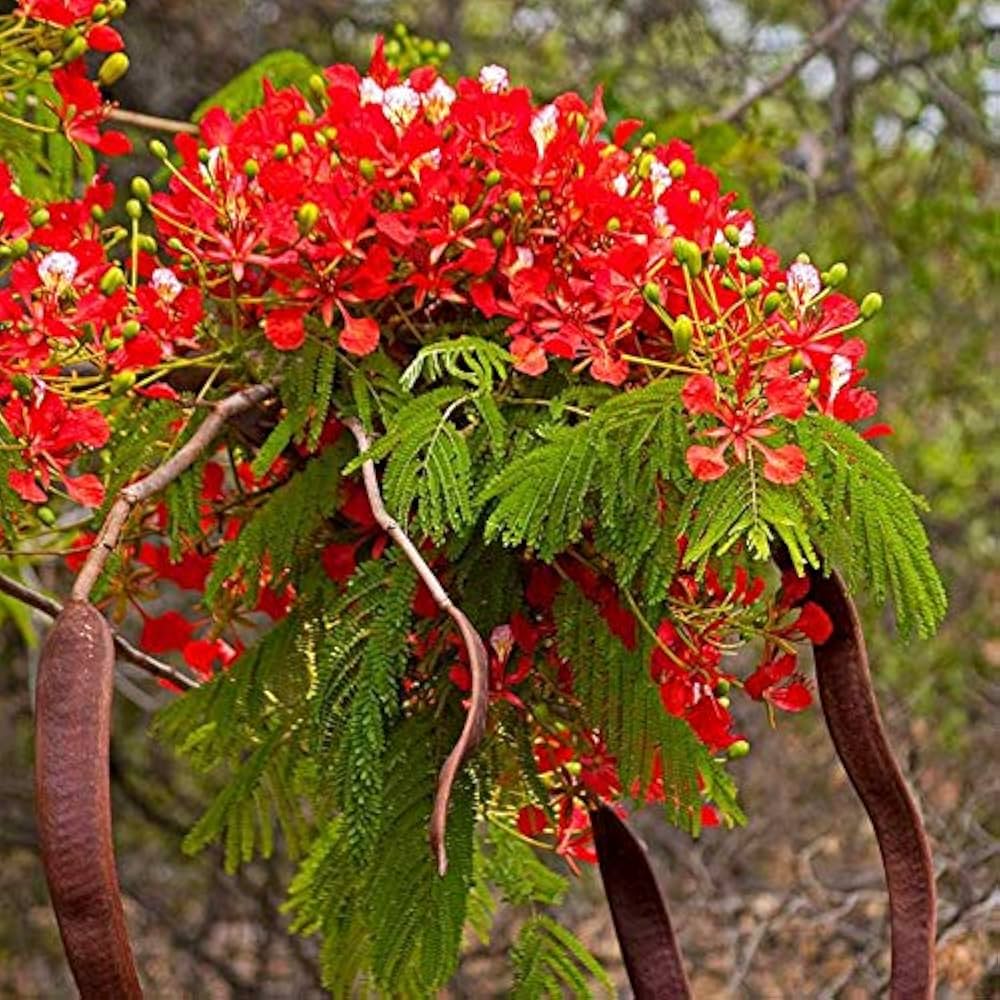
Gulmohar(நெருப்புக் கொன்றை)
Maintenance Level
Placements
outdoor
Toxic
No
Fragrance
No
Seasons
Summer or early autumn
Plant Height
20 to 40 feet
Water Frequency
Winter
Weekly twice
Summer
Daily twice
Fertilizer Frequency
Winter
Monthly twice
Summer
Monthly twice
The Gulmohar tree (Delonix regia) is a popular ornamental tree in India that is found in many states, including Maharashtra, Karnataka, Tamil Nadu, Andhra Pradesh, and Kerala. It is also known as the May-flower tree
<b>1. Climate: <br><br> Gulmohar trees prefer a warm, humid climate with temperatures between 64-90°F (18-32°C). <br> <b>2. Soil: Plant in well-draining soil with a pH range of 6.0-7.0. <br> <b>3. Watering: <br><br> Water regularly, but avoid overwatering. Gulmohar trees are drought-tolerant. <br> <b>4. Lighting: <br><br> Provide full sun to partial shade. <br> <b>5. Fertilization: <br><br> Feed with a balanced fertilizer during the growing season (spring-fall). <br> <b>6. Pruning: <br><br> Prune regularly to maintain shape, promote new growth, and remove dead branches
<b>1. Ornamental value: <br><br> Gulmohar trees are known for their showy, fragrant flowers that attract pollinators and add beauty to the landscape. <br> <b>2. Shade provision: <br><br> Gulmohar trees provide shade, making them a popular choice for parks, gardens, and streets. <br> <b>3. Air purification: <br><br> Gulmohar trees are natural air purifiers, removing pollutants and toxins from the air. <br> <b>4. Soil erosion control: <br><br> Gulmohar trees have a deep root system, making them effective for controlling soil erosion and stabilizing soil. <br> <b>5. Wildlife habitat: <br><br> Gulmohar trees provide a habitat for various wildlife, including birds, bees, and butterflies. <br> <b>6. Medicinal properties: <br><br> Gulmohar trees have been used in traditional medicine for various purposes, including treating fever, rheumatism, and digestive issues. <br> <b>7. Timber: <br><br> Gulmohar wood is valued for its durability and resistance to rot, making it suitable for furniture-making and construction.
Dos
<b>1. Watering: <br><br> Check soil moisture regularly, and water only when necessary. Avoid overwatering. <br> <b>2. Fertilization: <br><br> Feed with a balanced fertilizer during the growing season (spring-fall). <br> <b>3. Pruning: <br><br> Prune regularly to maintain shape, promote new growth, and remove dead branches. <br> <b>4. Pest control: <br><br> Check for pests like aphids, whiteflies, and spider mites. Use insecticidal soap or neem oil if necessary. <br> <b>5. Disease prevention: <br><br> Inspect plants regularly for signs of disease like leaf spot, root rot, or leaf drop. <br> <b>6. Soil care: <br><br> Mulch around the base to retain moisture and suppress weeds. <br> <b>7. Temperature: <br><br> Protect plants from extreme temperatures below 40°F (4°C) or above 100°F (38°C).
Don'ts
Avoid overwatering