
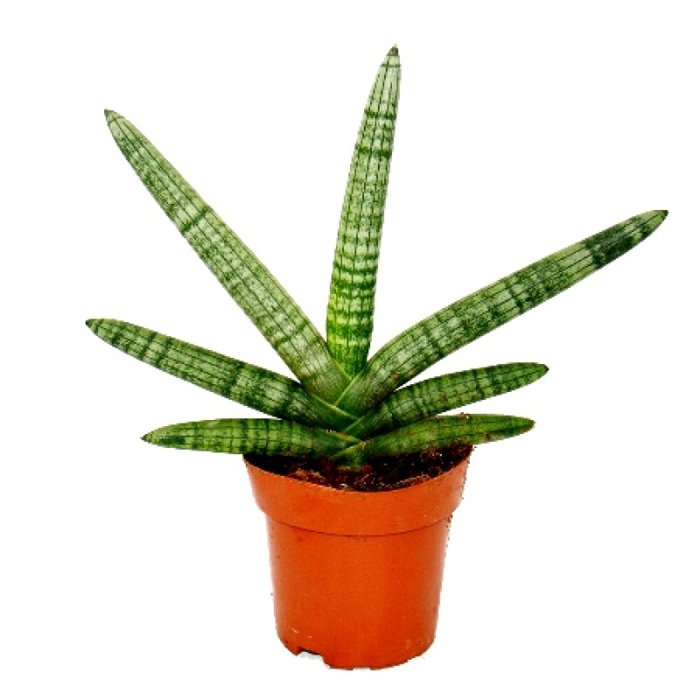
Sansevieria Trifasciata cylindrica
Maintenance Level
Low
Placements
Indoor and outdoor
Toxic
Yes
Fragrance
None
Seasons
All weather
Plant Height
7ft
Water Frequency
Winter
Weekly twice
Summer
Weekly twice
Fertilizer Frequency
Winter
3-4month
Summer
5-6 month
The long, tube-shaped leaves of this plant give it its name: snake plant. The leaves have markings in various shades of green, are meaty, thick at the base, grow straight, and reach a height of seven feet.<br> All in all, it forms clusters and a fan shape from a single rosette. It is also known as the Elephant's Toothpick or the Brazil Saint Barbara Sword.
<b>Type of soils</b><br> Well-drained, potting mix are needed<br> <b>Type of Fertilizer</b><br> Mild cactus fertilizer<br> <b>Development Trend Moderate</b><br> Repotting:Repot the plant in the springtime only if it becomes overcrowded and has to be divided.<br> Propagation:Transmission Divide the subterranean plant stem, or rhizome, and transplant the plantlets into new pots.<br> <b>Process</b><br> 1. The dimensions of the pot, the kind of soil it is planted in, the growing environment, and the atmosphere in your house.<br> 2. To allow extra water to easily drain out of the pot, make sure the container it is planted in has at least one drainage hole. this keeps water from accumulating at the bottom, which could cause root rot.<br> 3.Well-drained, potting mix are needed<br> 4.During the growing season, use a mild cactus fertilizer
It's well knowledge that Sansevierias can help filter the air. A hundred square feet can be effectively cleaned by one plant! Sansevieria Superba can better conserve water and resist droughts because, in contrast to most other plants, it exchanges carbon dioxide and oxygen at night.
Dos
Although Sansevieria like bright, filtered light, they can survive in lower light levels if the watering schedule is changed and the soil is maintained somewhat dry.
Don'ts
Root rot is often caused by overwatering. Look out for spider mites and mealybugs.