
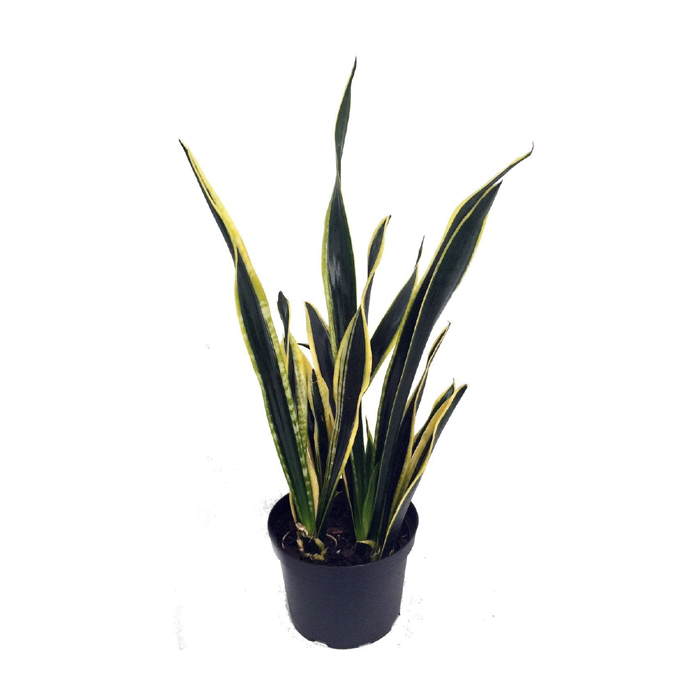
Sansevieria trifasciata Black Gold
Maintenance Level
Low
Placements
Indoor
Toxic
Yes
Fragrance
None
Seasons
All weather
Plant Height
3ft
Water Frequency
Winter
Weekly twice
Summer
Weekly twice
Fertilizer Frequency
Winter
3-4month
Summer
5-6 month
Its dark green leaves with brilliant yellow borders set it out from the others. In addition, the leaves are up to three feet long, stiff, and fibrous. In April, it blooms white or yellowish flowers.<br> Because of its relaxing qualities, NASA has explicitly named it as one of the top 10 air filtration plants for bedrooms. It is referred to as the lucky plant in Chinese feng shui, symbolically.
<b>Type of soils</b><br> Well-drained, potting mix are needed<br> <b>Type of Fertilizer</b><br> Mild cactus fertilizer<br> <b>Development Trend Moderate</b><br> Repotting:Repotting these plants is a simple process when needed. As an alternative, young branches that appear as spikes out of the ground can be removed and potted on their own.<br> Propagation:Transmission Divide the subterranean plant stem, or rhizome, and transplant the plantlets into new pots.<br><br> <b>Process</b><br> 1. The dimensions of the pot, the kind of soil it is planted in, the growing environment, and the atmosphere in your house.<br> 2. To allow extra water to easily drain out of the pot, make sure the container it is planted in has at least one drainage hole. this keeps water from accumulating at the bottom, which could cause root rot.<br> 3.Well-drained, potting mix are needed<br> 4.During the growing season, use a mild cactus fertilizer
The Plant of Snakes is a low-maintenance houseplant. It can withstand low light levels. At night, snake plants release oxygen, and NASA strongly suggests using snake plants to absorb airborne pollutants.
Dos
Avoid regions with direct sunlight as it might scorch the leaves, and also stay away from dimly lit areas as they may hinder growth.
Don'ts
Root rot is often caused by overwatering. Look out for spider mites and mealybugs.