
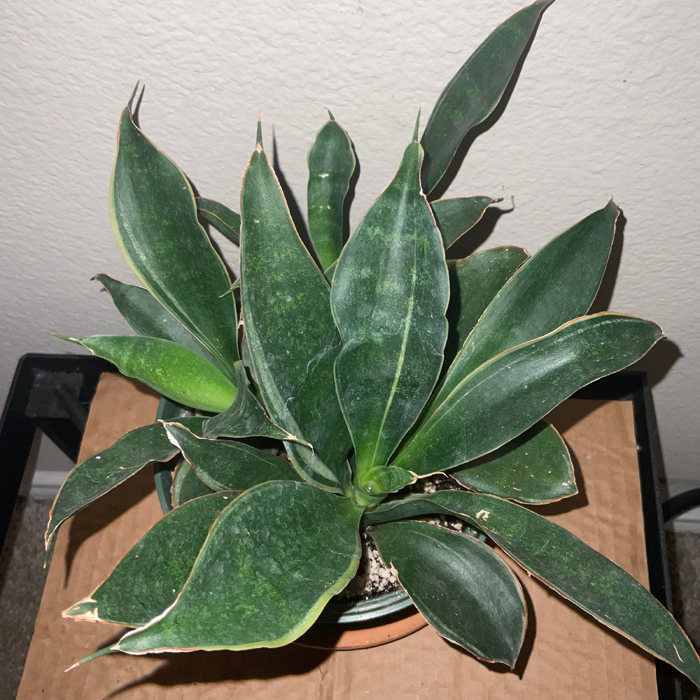
Sansevieria subspicata
Maintenance Level
Low
Placements
Indoor and outdoor
Toxic
Yes
Fragrance
None
Seasons
All weather
Plant Height
2ft
Water Frequency
Winter
Weekly twice
Summer
Weekly twice
Fertilizer Frequency
Winter
3-4month
Summer
5-6 month
One of our smaller and more compact kinds, Subspicata grows quickly and will quickly fill or burst out of an eight-inch container. The leaves can grow up to 10" tall and are wavy with some marbling of a deep green color. Our most popular indoor plants are Sansevierias, which need little watering or light. In zone 10 plus, they create a lovely, low-maintenance border in the ground.
<b>Type of soils</b><br> Well-drained, potting mix are needed<br> <b>Type of Fertilizer</b><br> Mild cactus fertilizer<br> <b>Development Trend Moderate</b><br> Repotting:Repot the plant in the springtime only if it becomes overcrowded and has to be divided.<br> Propagation: Transmission Divide the subterranean plant stem, or rhizome, and transplant the plantlets into new pots.<br> <b>Process</b><br> 1. The dimensions of the pot, the kind of soil it is planted in, the growing environment, and the atmosphere in your house.<br> 2. To allow extra water to easily drain out of the pot, make sure the container it is planted in has at least one drainage hole. this keeps water from accumulating at the bottom, which could cause root rot.<br> 3.Well-drained, potting mix are needed<br> 4.During the growing season, use a mild cactus fertilizer
The Plant of Snakes is a low-maintenance houseplant. It can withstand low light levels. At night, snake plants release oxygen, and NASA strongly suggests using snake plants to absorb airborne pollutants.
Dos
Although Sansevieria like bright, filtered light, they can survive in lower light levels if the watering schedule is changed and the soil is maintained somewhat dry.
Don'ts
Root rot is often caused by overwatering. Look out for spider mites and mealybugs.