
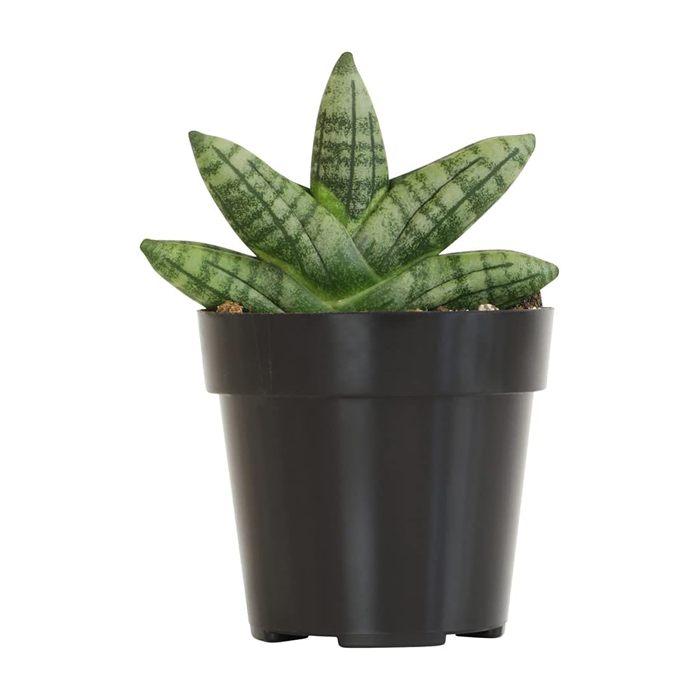
Sansevieria Eilensis
Maintenance Level
Low
Placements
Indoor and outdoor
Toxic
Yes
Fragrance
None
Seasons
All season
Plant Height
3in to 5in
Water Frequency
Winter
Weekly once
Summer
Weekly twice
Fertilizer Frequency
Winter
6 month once
Summer
6 month once
Remarkably slow-growing, this one has thick, bluish-green leaves that, when fully grown, curve downward. Its succulent leaves grow to a maximum length of 5 inches and a maximum thickness of 1 inch.The horizontal lines that span the length of this one make it stand out. Depending on how much water they receive, the leaves expand or contract along these lines.
<b>Type of soils</b><br> Sandy soil, enriched with peaty composite and well-drained soils are needed<br> <b>Type of Fertilizer</b><br> Liquid or water- soluble fertilizer<br> <b>Development Trend Moderate</b><br> Repotting:Repot the plant in the springtime only if it becomes overcrowded and has to be divided.<br> Propagation:Transmission Divide the subterranean plant stem, or rhizome, and transplant the plantlets into new pots. If you want a mature plant to appear bushier and heavier, you can prune it.<br><br> <b>Process</b><br> 1. The dimensions of the pot, the kind of soil it is planted in, the growing environment, and the atmosphere in your house.<br> 2. To allow extra water to easily drain out of the pot, make sure the container it is planted in has at least one drainage hole. this keeps water from accumulating at the bottom, which could cause root rot.<br> 3.Well-drained, loose potting mix. It can also grow readily in a soilless medium.<br> 4.During the growing season, use a Iiquid or water- soluble fertilizer
Sansevieria species are thought to be effective air purifiers because they eliminate airborne pollutants like formaldehyde, xylene, and toluene. At night, the plant also converts CO2 to oxygen.
Dos
The direct sun can scorch the leaves on your Sansevieria ehrenbergii 'Blue' plant, so keep it out of the sun. Avoid overwatering your plant since this can cause root rot. Take care not to fertilize this plant excessively! Repotting this plant on a regular basis is not necessary.
Don'ts
Root rot is often caused by overwatering. Look out for spider mites and mealybugs.