
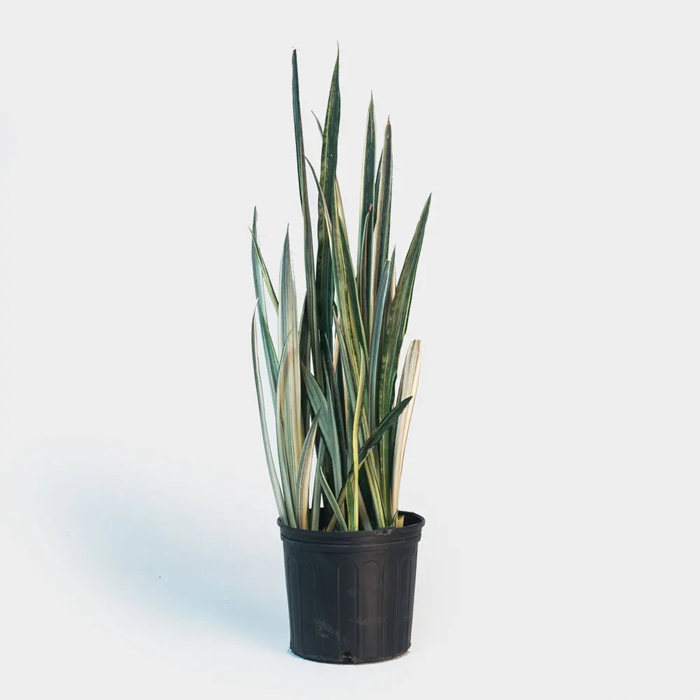
Sansevieria Bantels Sensation Plant
Maintenance Level
Low
Placements
Indoor and outdoor
Toxic
Yes
Fragrance
Yes
Seasons
All weather
Plant Height
2ft to 3ft
Water Frequency
Winter
Weekly once
Summer
Weekly once
Fertilizer Frequency
Winter
Every 2-3 weeks
Summer
Every 2-3 weeks
Called often White Stripped Sansevieria, 'Bantel's Sensation' is a rare and uncommon plant with leaves that have a noticeable white vertical striping. The 1-2" wide leaves are narrower than most other sansevierias and in a container 'Bantel's Sensation' grows 36" tall. During the long summer days or when the plant is stressed, sweetly fragrant white blossoms open.
<b>Type of soils</b><br> A well-drained, loose potting mix<br> <b>Type of Fertilizer</b><br> Light fertilizer for cacti<br> <b>Development Trend Moderate</b><br> The variegated snake plant variety "Bantel's Sensation" has dark grey-green leaves with a striking, vertical, creamy white stripe.<br><br> <b>Process</b><br> 1. The dimensions of the pot, the kind of soil it is planted in, the growing environment, and the atmosphere in your house.<br> 2. To allow extra water to easily drain out of the pot, make sure the container it is planted in has at least one drainage hole. this keeps water from accumulating at the bottom, which could cause root rot.<br> 3.Well-drained, loose potting mix. It can also grow readily in a soilless medium.<br> 4.During the growing season, use a light cactus fertilizer; in the winter, skip the fertilizer.
Sansevieria species are thought to be effective air purifiers because they eliminate airborne pollutants like formaldehyde, xylene, and toluene. At night, the plant also converts CO2 to oxygen.
Dos
Light: Sansevieria may grow in nearly every type of light. Will withstand dim light as well as bright light and full sun. It's a great option for dimly lit environments.<br> Water: During the growing season, let the top inch (2.5 cm) of soil dry out in between waterings. Water the soil just enough in the winter to keep it from drying up. Too much watering will rot the roots. The core of the rosette of leaves will decay quickly if left moist, so be careful not to water it.<br> Humidity: Use a spray bottle to mist the leaves multiple times a week. During the summer growing season, mist your plant more often; the more water you can provide the flowers, the healthier they will be.
Don'ts
Root rot is often caused by overwatering. Look out for spider mites and mealybugs.