
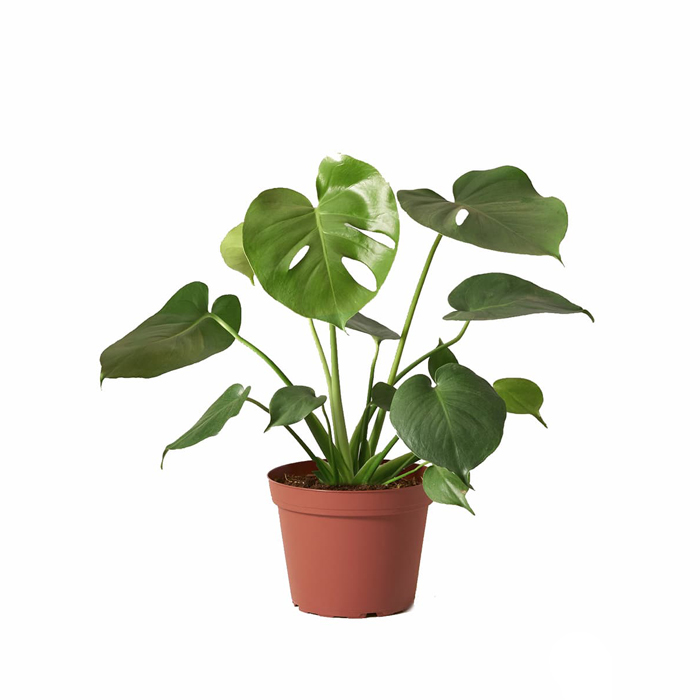
Monstera Deliciosa
Maintenance Level
Low
Placements
Indoors and outdoor shades
Toxic
Yes
Fragrance
Yes
Seasons
Spring and Summer
Plant Height
3ft to 15ft
Water Frequency
Winter
Weekly once
Summer
Twice a week
Fertilizer Frequency
Winter
2-3months
Summer
Every month
The undisputed monarch of tropical plants, the Monstera Deliciosa, also known as the Swiss Cheese Plant, is a visually stunning plant with enormous, glossy leaves that naturally have holes in them, much like the holes in Swiss cheese. You've probably seen it in a million Instagram posts about home décor. Its very existence brightens a space and enhances the décor.
<b>Type of soils:</b><br> Well drained soil, moderately moist soil are needed.<br> <b>Type of Fertilizer:</b><br> balanced liquid or water-soluble fertilizer <br> Pruning for Two to Three months<br> Repotting is every two years once<br><br> <b>Process</b><br> 1.USDA zones 10 through 12 are suitable for outdoor planting; requires warmth and humidity.<br> 2.prefers dappled light or moderate sunlight.<br> 3.soil that drains efficiently, based on peat, and either acidic or neutral.<br> 4.Water your pot frequently and use one with lots of drainage holes.<br> 5.unable to withstand full sun or salted soil.<br> 6.Apply a well-balanced fertilizer three or four times annually.
Air purification. In addition to being naturally detoxifying, monstera plants also have the following benefits: low maintenance, symbolic and cultural significance, adaptability, stress reduction, growth potential, and a connection to tropical vibes.
Dos
Although this plant can survive in nearly any type of environment, you may give it an extra treat by misting it gently once a week with a Mister. For optimal results, spritz your Monstera early in the day to allow the water to completely evaporate before dusk falls. Your Monstera will thrive at room temps typically between 60 and 80 degrees.
Don'ts
Strong, direct sunlight should be avoided since it could burn the leaves.